An Introduction To Decision Theory. Martin Peterson Download
Rational choice theory refers to a set of guidelines that help understand economical and social behaviour.[ane] The theory originated in the eighteenth century and tin can be traced dorsum to political economist and philosopher, Adam Smith.[two] The theory postulates that an individual will perform a cost-do good analysis to determine whether an option is right for them.[three] Information technology as well suggests that an individual'due south self-driven rational actions will help ameliorate the overall economic system. Rational selection theory looks at iii concepts: rational actors, self interest and the invisible hand.[four]
Rationality can be used equally an assumption for the behaviour of individuals in a wide range of contexts exterior of economic science. It is too used in political science,[5] folklore,[vi] and philosophy.
Overview [edit]
The basic premise of rational pick theory is that the decisions made by private actors will collectively produce aggregate social behaviour. The theory also assumes that individuals have preferences out of bachelor selection alternatives. These preferences are assumed to exist complete and transitive. Abyss refers to the individual being able to say which of the options they adopt (i.e. private prefers A over B, B over A or are indifferent to both). Alternatively, transitivity is where the individual weakly prefers option A over B and weakly prefers option B over C, leading to the conclusion that the individual weakly prefers A over C. The rational amanuensis volition then perform their own cost-benefit assay using a variety of benchmark to perform their self-adamant best choice of action.
Ane version of rationality is instrumental rationality, which involves achieving a goal using the most cost constructive method without reflecting on the worthiness of that goal. Duncan Snidal emphasises that the goals are not restricted to self-regarding, selfish, or cloth interests. They also include other-regarding, donating, too as normative or ideational goals.[7]
Rational choice theory does non merits to describe the pick process, but rather information technology helps predict the outcome and pattern of option. Information technology is consequently assumed that the individual is self-interested or being homo economicus. Here, the private comes to a decision that maximizes personal advantage by balancing costs and benefits.[eight] Proponents of such models, peculiarly those associated with the Chicago schoolhouse of economics, do not claim that a model'southward assumptions are an accurate description of reality, just that they assist formulate articulate and falsifiable hypotheses.[ commendation needed ] In this view, the only way to judge the success of a hypothesis is empirical tests.[8] To use an example from Milton Friedman, if a theory that says that the behavior of the leaves of a tree is explained by their rationality passes the empirical test, it is seen as successful.
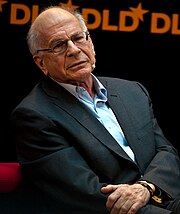
Without explicitly dictating the goal or preferences of the private, it may exist impossible to empirically exam or invalidate the rationality supposition. However, the predictions made by a specific version of the theory are testable. In recent years, the most prevalent version of rational choice theory, expected utility theory, has been challenged past the experimental results of behavioral economics. Economists are learning from other fields, such as psychology, and are enriching their theories of pick in order to go a more accurate view of human decision-making. For example, the behavioral economist and experimental psychologist Daniel Kahneman won the Nobel Memorial Prize in Economical Sciences in 2002 for his work in this field.
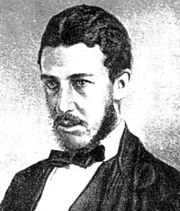
Rational choice theory has proposed that there are ii outcomes of two choices regarding homo action. Firstly, the viable region volition be chosen within all the possible and related action. Second, later the preferred option has been chosen, the feasible region that has been selected was picked based on restriction of financial, legal, social, physical or emotional restrictions that the agent is facing. After that, a choice volition be fabricated based on the preference order.[9]
The concept of rationality used in rational selection theory is unlike from the colloquial and most philosophical use of the word. In this sense, "rational" behaviour tin can refer to "sensible", "predictable", or "in a thoughtful, clear-headed way." Rational choice theory uses a much more narrow definition of rationality. At its most bones level, behavior is rational if it is goal-oriented, cogitating (evaluative), and consequent (beyond time and different option situations). This contrasts with beliefs that is random, impulsive, conditioned, or adopted by (unevaluative) false.[ citation needed ]
Early neoclassical economists writing well-nigh rational choice, including William Stanley Jevons, assumed that agents make consumption choices so as to maximize their happiness, or utility. Contemporary theory bases rational pick on a set of selection axioms that need to be satisfied, and typically does not specify where the goal (preferences, desires) comes from. Information technology mandates just a consequent ranking of the alternatives.[10] : 501 Individuals cull the best action according to their personal preferences and the constraints facing them. E.grand., at that place is nothing irrational in preferring fish to meat the first fourth dimension, but in that location is something irrational in preferring fish to meat in one instant and preferring meat to fish in another, without anything else having changed.
Deportment, assumptions, and individual preferences [edit]
The basic premise of rational choice theory is that the decisions made by individual actors will collectively produce amass social behaviour. Thus, each individual makes a decision based on their own preferences and the constraints (or choice set) they face.
Rational choice theory can be viewed in different contexts. At an individual level, the theory suggests that the agent will decide on the activity (or issue) they about adopt. If the actions (or outcomes) are evaluated in terms of costs and benefits, the choice with the maximum cyberspace benefit will be called by the rational individual. Rational behaviour is not solely driven by monetary gain, but can too be driven past emotional motives.
The theory can be applied to general settings outside of those identified by costs and benefits. In general, rational decision making entails choosing among all available alternatives the alternative that the private about prefers. The "alternatives" tin can be a set of actions ("what to do?") or a set up of objects ("what to choose/buy"). In the case of deportment, what the individual actually cares nearly are the outcomes that results from each possible action. Deportment, in this case, are only an instrument for obtaining a particular outcome.
Formal argument [edit]
The available alternatives are often expressed as a set of objects, for example a prepare of j exhaustive and exclusive actions:

For example, if a person can cull to vote for either Roger or Sara or to abstain, their set of possible alternatives is:

The theory makes two technical assumptions about individuals' preferences over alternatives:
- Completeness – for whatsoever two alternatives ai and aj in the set, either ai is preferred to aj , or aj is preferred to ai , or the individual is indifferent between ai and aj . In other words, all pairs of alternatives can be compared with each other.
- Transitivity – if alternative a 1 is preferred to a ii, and alternative a 2 is preferred to a iii, and so a 1 is preferred to a three.
Together these ii assumptions imply that given a set of exhaustive and exclusive deportment to choose from, an individual tin can rank the elements of this gear up in terms of his preferences in an internally consistent way (the ranking constitutes a partial ordering), and the set up has at to the lowest degree one maximal chemical element.
The preference between two alternatives can be:
- Strict preference occurs when an individual prefers a ane to a 2 and does not view them as equally preferred.
- Weak preference implies that individual either strictly prefers a 1 over a two or is indifferent between them.
- Indifference occurs when an private neither prefers a 1 to a 2, nor a 2 to a ane. Since (by completeness) the individual does not refuse a comparison, they must therefore be indifferent in this case.
Research that took off in the 1980s sought to develop models that drop these assumptions and contend that such behaviour could still be rational, Anand (1993). This work, oftentimes conducted by economic theorists and analytical philosophers, suggests ultimately that the assumptions or axioms to a higher place are not completely general and might at all-time be regarded every bit approximations.
Additional assumptions [edit]
- Perfect information: The unproblematic rational option model higher up assumes that the individual has full or perfect information about the alternatives, i.e., the ranking between two alternatives involves no uncertainty.
- Option under doubt: In a richer model that involves doubt about the how choices (actions) lead to eventual outcomes, the private effectively chooses between lotteries, where each lottery induces a unlike probability distribution over outcomes. The boosted assumption of independence of irrelevant alternatives and so leads to expected utility theory.
- Inter-temporal selection: when decisions affect choices (such as consumption) at unlike points in time, the standard method for evaluating alternatives beyond time involves discounting futurity payoffs.
- Express cognitive ability: identifying and weighing each alternative against every other may accept time, effort, and mental capacity. Recognising the cost that these impose or cognitive limitations of individuals gives rise to theories of bounded rationality.
Culling theories of human activeness include such components every bit Amos Tversky and Daniel Kahneman'south prospect theory, which reflects the empirical finding that, contrary to standard preferences assumed under neoclassical economics, individuals attach extra value to items that they already ain compared to similar items endemic by others. Nether standard preferences, the amount that an individual is willing to pay for an item (such as a drinking mug) is causeless to equal the amount they are willing to exist paid in order to part with information technology. In experiments, the latter cost is sometimes significantly college than the former (but see Plott and Zeiler 2005,[eleven] Plott and Zeiler 2007[12] and Klass and Zeiler, 2013[13]). Tversky and Kahneman[14] practice non characterize loss disfavor as irrational. Behavioral economic science includes a large number of other amendments to its motion-picture show of human behavior that go against neoclassical assumptions.
Utility maximization [edit]
Often preferences are described past their utility function or payoff part. This is an ordinal number that an individual assigns over the available actions, such as:

The private'southward preferences are then expressed as the relation betwixt these ordinal assignments. For case, if an individual prefers the candidate Sara over Roger over abnegation, their preferences would accept the relation:

A preference relation that as to a higher place satisfies completeness, transitivity, and, in addition, continuity, can be equivalently represented by a utility function.
Benefits [edit]
The rational choice approach allows preferences to be represented as real-valued utility functions. Economic decision making so becomes a trouble of maximizing this utility role, bailiwick to constraints (e.g. a budget). This has many advantages. Information technology provides a compact theory that makes empirical predictions with a relatively thin model - just a description of the amanuensis'due south objectives and constraints. Furthermore, optimization theory is a well-developed field of mathematics. These ii factors brand rational option models tractable compared to other approaches to choice. Most chiefly, this arroyo is strikingly full general. Information technology has been used to analyze not only personal and household choices nearly traditional economical matters like consumption and savings, only also choices about education, spousal relationship, child-begetting, migration, crime and so on, besides as business organisation decisions about output, investment, hiring, entry, exit, etc. with varying degrees of success.
In the field of political scientific discipline rational choice theory has been used to assist predict human determination making and model for the future; therefore it is useful in creating effective public policy, and enables the government to develop solutions rapidly and efficiently.
Despite the empirical shortcomings of rational choice theory, the flexibility and tractability of rational choice models (and the lack of equally powerful alternatives) atomic number 82 to them still existence widely used.[xv]
Applications [edit]
Rational choice theory has become increasingly employed in social sciences other than economics, such every bit sociology, evolutionary theory and political science in contempo decades.[sixteen] [17] Information technology has had far-reaching impacts on the study of political science, peculiarly in fields like the report of interest groups, elections, behaviour in legislatures, coalitions, and bureaucracy.[18] In these fields, the utilize of the rational choice theory to explain broad social phenomena is the discipline of controversy.[xix] [20]
Rational choice theory in politics [edit]
The human relationship betwixt the rational pick theory and politics takes many forms, whether that be in voter behaviour, the actions of world leaders or even the mode that important matters are dealt with.
Voter behaviour shifts significantly thanks to rational theory, which is ingrained in human being nature, the most significant of which occurs when there are times of economic trouble. This was assessed in particular by Anthony Downs who concluded that voters were acting on thoughts of higher income as a person 'votes for whatsoever party he believes would provide him with the highest utility income from government activity'.[21] This is a significant simplification of how the theory influences people's thoughts only makes up a core function of rational theory equally a whole. In a more complex fashion, voters will react often radically in times of existent economical strife, which tin can lead to an increase in extremism. The government volition be made responsible by the voters and thus they encounter a need to make a modify. Some of the most infamous extremist parties came to power on the back of economic recessions, the most pregnant being the far right Nazi Political party in Germany, who used the hyperinflation at the time to gain power rapidly, as they promised a solution and a scapegoat for the blame. At that place is a tendency to this, as a comprehensive study carried out by three political scientists ended, as a 'turn to the right'[22] occurs and it is clear that information technology is the work of the rational theory because within 10 years the politics returns to a more common country.
Anthony Downs also suggested that voting involves a toll/benefit analysis in social club to make up one's mind how a person would vote. He argues that someone will vote if B+D>C, where B= The do good of the voter winning, D= Satisfaction and C being the toll of voting.[23] It is from this that we tin can decide that parties have moved their policy outlook to be more centric in society to maximise the amount of voters they have for support. This is becoming more and more prevalent with every ballot as each party tries to appeal to a broader range of voters. This is specially prevalent equally in that location has been a turn down in party memberships, meaning that each party has much less guaranteed votes. In the last ten years there has been a 37% decrease in party memberships, with this trend having started soon afterward the Second World War.[24] This shows that the electorate a leaning towards making informed, rational decisions every bit opposed to relying on a pattern of behaviours. Overall the electorate are becoming more inclined to vote based on recency factors in order to protect their interests and maximise their utility.
Pregnant Rational Choice Theory has the ability to be used in modelling and forecasting, owing to its nature being derived from economical thought to explicate human being behaviour. This is useful in politics as the theory can quantify human conclusion making and behaviour into information that tin be interpreted, helping to predict behaviours and outcomes. Therefore enabling the ability to direct and shape political thinking and campaigns, maximizing utility. [25]
As useful every bit the use of empirical data is in building a clear flick of voting behaviour it doesn't full testify all aspects of political conclusion making whether that exist from the electorate or the policy makers. Equally [26] brings the idea of commitment as a key concept to the behaviour of political agents. That information technology is non merely cocky interest that is the event of personal cost benefit analysis only it is also the idea of shared interests. That the cardinal idea of utility needs to be defined not but as material utility just also as experienced utility, these expansions to classical rational choice theory could and so begin to remove the weakness in regards to morals of the agents which it aims to interoperate their actions.
A downfall of rational choice theory in a political sense, is that is the pursuit of individual goals can atomic number 82 to collectively irrational outcomes. This problem of commonage action can disincentivise people to vote. Even though a group of people may have mutual interests, they also have conflicting ones that cause misalignment within the group and therefore an outcome that does non do good the group as a whole as people want to pursue their own individual interests. This trouble is rooted in Rational Option theory considering of the theories emphasis on the rational agents performing their own cost-benefit analysis to maximize their self-interests. [27]
An case of this can be shown by some of the globe's virtually troubling problems, such as the climate crunch. Nation states tin can be seen as rational as they fulfil their own interests of economic growth, however, this economical growth often leads to pollution as increasing a nation's factors of production takes a toll on the environment. It is irrational for a state to forego this economic growth as the cost of pollution does not entirely autumn on them, as one state'southward carbon emissions would not entirely affect that state alone, every bit it impacts elsewhere. This means the do good of the economic growth outweighs the cost of pollution, according to the theory of Rational Option.[28] However, If all countries made this rational adding it would lead to a massive amount of pollution. Making the outcome of a rational pick, a collectively irrational outcome.
Rational choice theory in international relations [edit]
Rational choice theory has become one of the major approaches in the written report of international relations. Its proponents typically assume that states are the primal actors in globe politics and that they seek goals such as power, security, or wealth.[vii] Such motivation for power and security tin therefore be seen as pre-emptive to initiatives that focus on the pursuit of maximising satisfaction.[three] Such that disharmonize between states occurs due to the attainment of international goals infringing upon another states'. Subsequently Rational pick theory tin be applied to policy issues ranging from international trade and international cooperation to sanctions, arms contest, (nuclear) deterrence, and state of war.
For example, some scholars have examined how states can brand credible threats to deter other states from a (nuclear) attack.[29] Others have explored nether what atmospheric condition states wage war against each other.[30] Yet others have investigated nether what circumstances the threat and imposition of international economic sanctions tend to succeed and when they are likely to fail.[31]
[edit]
Rational Choice Theory and Social exchange theory involves looking at all social relations in the class of costs and rewards, both tangible and non tangible.
According to Abell, Rational Choice Theory is "understanding individual actors... equally acting, or more probable interacting, in a manner such that they can exist deemed to be doing the all-time they tin can for themselves, given their objectives, resources, circumstances, every bit they seem them".[32] Rational Choice Theory has been used to comprehend the complex social phenomena, of which derives from the actions and motivations of an individual. Individuals are often highly motivated by their wants and needs.
Past making calculative decisions, it is considered as rational action. Individuals are oft making calculative decisions in social situations by weighing out the pros and cons of an action taken towards a person. The decision to act on a rational decision is as well dependent on the unforeseen benefits of the friendship. Homan mentions that deportment of humans are motivated past punishment or rewards. This reinforcement through punishments or rewards determines the course of activity taken past a person in a social situation too. Individuals are motivated by mutual reinforcement and are also fundamentally motivated by the approving of others.[33] Attaining the approval of others has been a generalized character, along with money, as a means of commutation in both Social and Economic exchanges. In Economic exchanges, information technology involves the commutation of goods or services. In Social exchange, it is the exchange of approval and sure other valued behaviors.
Rational Choice Theory in this instance, heavily emphasizes the individual'due south interest as a starting point for making social decisions. Despite differing view points about Rational option theory, it all comes downward to the individual as a bones unit of theory. Even though sharing, cooperation and cultural norms emerge, it all stems from an individual's initial concern about the self.[34]
Chiliad.Southward Becker offers an example of how Rational selection tin be applied to personal decisions, specifically regarding the rationale that goes behind decisions on whether to marry or divorce another individual. Due to the self-serving drive on which the theory of rational option is derived, Becker concludes that people marry if the expected utility from such matrimony exceeds the utility one would gain from remaining single, and in the same way couples would separate should the utility of being together exist less than expected and provide less (economical) benefit than existence separated would.[35] Since the theory behind rational pick is that individuals will take the course of action that best serves their personal interests, when considering relationships it is notwithstanding assumed that they will display such mentality due to deep-rooted, self-interested aspects of human nature.[36]
Social Commutation and Rational Pick Theory both comes downwardly to an individual'due south efforts to meet their ain personal needs and interests through the choices they make. Even though some may exist done sincerely for the welfare of others at that point of time, both theories point to the benefits received in render. These returns may be received immediately or in the future, be it tangible or not.
Coleman discussed a number of theories to elaborate on the premises and promises of rational choice theory. One of the concepts that He introduced was Trust.[37] Information technology is where "individuals identify trust, in both sentence and functioning of others, based on rational considerations of what is best, given the alternatives they confront".[37] In a social situation, there has to be a level of trust among the individuals. He noted that this level of trust is a consideration that an individual takes into business before deciding on a rational action towards another private. It affects the social situation equally 1 navigates the risks and benefits of an activity. By assessing the possible outcomes or alternatives to an activeness for another private, the person is making a calculated decision. In another situation such equally making a bet, yous are calculating the possible lost and how much tin be won. If the chances of winning exceeds the toll of losing, the rational determination would be to place the bet. Therefore, the decision to place trust in another individual involves the same rational calculations that are involved in the decision of making a bet.
Even though rational theory is used in Economics and Social settings, there are some similarities and differences. The concept of advantage and reinforcement is parallel to each other while the concept of cost is also parallel to the concept of punishment. However, there is a difference of underlying assumptions in both contexts. In social a social setting, the focus is often on the current or by reinforcements instead of the future although there is no guarantee of immediate tangible or intangible returns from another private. In Economics, decisions are made with heavier accent on hereafter rewards.
Despite having both perspectives differ in focus, they primarily reflect on how individuals make unlike rational decisions when given an immediate or long-term circumstances to consider in their rational determination making.
Criticism
This theory critically helps us to understand the choices an individual or lodge makes. Even though some decisions are not entirely rational, it is possible that Rational Choice Theory still helps u.s. to empathize the motivations behind it. Moreover, in that location has been a lot of discourse about Rational Choice Theory. It has ofttimes been too individualistic, minimalistic and heavily focused on rational decisions in social actions. Sociologists tend to justify any human action as rational as individuals are solely motivated past the pursuit of self-interest. It does not consider the possibility of pure altruism of a social substitution between individuals.
Criticism [edit]
Both the assumptions and the behavioral predictions of rational choice theory have sparked criticism from various camps.
The limits of rationality [edit]
As mentioned above, some economists accept developed models of divisional rationality, such as Herbert Simon, which hope to exist more than psychologically plausible without completely abandoning the thought that reason underlies decision-making processes. Simon argues factors such as imperfect data, incertitude and time constraints all affect and limit our rationality, and therefore our determination making skills. Furthermore his concepts of 'satisficing' and 'optimizing' suggest sometimes because of these factors, we settle for a decision which is skillful enough, rather than the all-time determination.[38] Other economists have developed more theories of human controlling that let for the roles of uncertainty, institutions, and determination of individual tastes past their socioeconomic surround (cf. Fernandez-Huerga, 2008).
Philosophical critiques [edit]
Martin Hollis and Edward J. Nell's 1975 volume offers both a philosophical critique of neo-classical economics and an innovation in the field of economic methodology. Further, they outlined an alternative vision to neo-classicism based on a rationalist theory of cognition. Within neo-classicism, the authors addressed consumer behaviour (in the form of indifference curves and unproblematic versions of revealed preference theory) and marginalist producer behaviour in both product and factor markets. Both are based on rational optimizing behaviour. They consider imperfect besides as perfect markets since neo-classical thinking embraces many market varieties and disposes of a whole system for their classification. However, the authors believe that the issues arising from basic maximizing models have extensive implications for econometric methodology (Hollis and Nell, 1975, p. 2). In particular it is this class of models – rational behavior as maximizing behaviour – which provide support for specification and identification. And this, they argue, is where the flaw is to be establish. Hollis and Nell (1975) argued that positivism (broadly conceived) has provided neo-classicism with important support, which they then show to be unfounded. They base their critique of neo-classicism non only on their critique of positivism just also on the alternative they advise, rationalism.[39] Indeed, they contend that rationality is central to neo-classical economics – as rational pick – and that this conception of rationality is misused. Demands are made of information technology that it cannot fulfill. Ultimately, individuals do not always human activity rationally or conduct themselves in a utility maximising manner.[40]
Duncan Yard. Foley (2003, p. ane) has also provided an important criticism of the concept of rationality and its role in economics. He argued that
"Rationality" has played a key function in shaping and establishing the hegemony of contemporary mainstream economics. As the specific claims of robust neoclassicism fade into the history of economic thought, an orientation toward situating explanations of economic phenomena in relation to rationality has increasingly become the touchstone by which mainstream economists identify themselves and recognize each other. This is not then much a question of adherence to any detail formulation of rationality, merely of taking rationality of private behavior as the unquestioned starting betoken of economical assay.
Foley (2003, p. 9) went on to argue that
The concept of rationality, to employ Hegelian language, represents the relations of modern backer club ane-sidedly. The burden of rational-thespian theory is the exclamation that 'naturally' constituted individuals facing existential conflicts over scarce resources would rationally impose on themselves the institutional structures of modern capitalist social club, or something approximating them. Merely this fashion of looking at matters systematically neglects the ways in which modern capitalist society and its social relations in fact constitute the 'rational', calculating private. The well-known limitations of rational-player theory, its static quality, its logical antinomies, its vulnerability to arguments of space regress, its failure to develop a progressive concrete research program, tin all be traced to this starting-point.
More recently Edward J. Nell and Karim Errouaki (2011, Ch. 1) argued that:
The DNA of neoclassical economics is defective. Neither the induction trouble nor the problems of methodological individualism can exist solved within the framework of neoclassical assumptions. The neoclassical approach is to telephone call on rational economic man to solve both. Economic relationships that reflect rational choice should be 'projectible'. But that attributes a deductive power to 'rational' that it cannot accept consistently with positivist (or even pragmatist) assumptions (which require deductions to be simply analytic). To make rational calculations projectible, the agents may be assumed to have idealized abilities, particularly foresight; but then the consecration problem is out of reach because the agents of the earth do non resemble those of the model. The agents of the model can be abstract, but they cannot be endowed with powers actual agents could not have. This also undermines methodological individualism; if behaviour cannot exist reliably predicted on the basis of the 'rational choices of agents', a social social club cannot reliably follow from the choices of agents.
Empirical critiques [edit]
In their 1994 work, Pathologies of Rational Pick Theory, Donald P. Light-green and Ian Shapiro argue that the empirical outputs of rational choice theory have been limited. They contend that much of the applicable literature, at to the lowest degree in political science, was done with weak statistical methods and that when corrected many of the empirical outcomes no longer hold. When taken in this perspective, rational choice theory has provided very little to the overall agreement of political interaction - and is an corporeality certainly disproportionately weak relative to its appearance in the literature. Yet, they concede that cutting-edge research, past scholars well-versed in the general scholarship of their fields (such as work on the U.Southward. Congress by Keith Krehbiel, Gary Cox, and Mat McCubbins) has generated valuable scientific progress.[41]
Methodological critiques [edit]
Schram and Caterino (2006) contains a fundamental methodological criticism of rational choice theory for promoting the view that the natural scientific discipline model is the but appropriate methodology in social science and that political science should follow this model, with its emphasis on quantification and mathematization. Schram and Caterino contend instead for methodological pluralism. The same statement is made by William E. Connolly, who in his work Neuropolitics shows that advances in neuroscience further illuminate some of the problematic practices of rational choice theory.
Sociological critiques [edit]
Pierre Bourdieu fiercely opposed rational selection theory as grounded in a misunderstanding of how social agents operate. Bourdieu argued that social agents do not continuously calculate co-ordinate to explicit rational and economical criteria. According to Bourdieu, social agents operate according to an implicit practical logic—a practical sense—and bodily dispositions. Social agents human action according to their "feel for the game" (the "feel" being, roughly, habitus, and the "game" beingness the field).[42]
Other social scientists, inspired in role by Bourdieu'due south thinking have expressed business organisation about the inappropriate use of economical metaphors in other contexts, suggesting that this may have political implications. The argument they make is that by treating everything as a kind of "economy" they make a particular vision of the way an economy works seem more natural. Thus, they propose, rational choice is as much ideological as it is scientific, which does not in and of itself negate its scientific utility.[43]
Critiques on the basis of evolutionary psychology [edit]
An evolutionary psychology perspective suggests that many of the seeming contradictions and biases regarding rational choice can exist explained as being rational in the context of maximizing biological fettle in the bequeathed environment but non necessarily in the electric current one. Thus, when living at subsistence level where a reduction of resources may have meant decease it may take been rational to place a greater value on losses than on gains. Proponents debate it may also explain differences between groups.[44]
Critiques on the basis of emotion research [edit]
Proponents of emotional option theory criticize the rational choice paradigm past drawing on new findings from emotion enquiry in psychology and neuroscience. They point out that rational choice theory is generally based on the assumption that decision-making is a conscious and cogitating process based on thoughts and beliefs. Information technology presumes that people decide on the basis of calculation and deliberation. However, cumulative research in neuroscience suggests that only a small office of the encephalon's activities operate at the level of conscious reflection. The vast majority of its activities consist of unconscious appraisals and emotions.[45] The significance of emotions in decision-making has generally been ignored by rational selection theory, according to these critics. Moreover, emotional option theorists contend that the rational pick paradigm has difficulty incorporating emotions into its models, considering it cannot account for the social nature of emotions. Fifty-fifty though emotions are felt by individuals, psychologists and sociologists accept shown that emotions cannot be isolated from the social environment in which they arise. Emotions are inextricably intertwined with people'south social norms and identities, which are typically outside the telescopic of standard rational choice models.[46] Emotional choice theory seeks to capture not only the social but also the physiological and dynamic grapheme of emotions. It represents a unitary activity model to organize, explain, and predict the ways in which emotions shape controlling.[47]
The difference betwixt public and individual spheres [edit]
Herbert Gintis has also provided an important criticism to rational selection theory. He argued that rationality differs between the public and individual spheres. The public sphere beingness what you practise in collective action and the private sphere being what you lot practise in your private life. Gintis argues that this is because "models of rational pick in the individual sphere treat agents' choices every bit instrumental". "Behaviour in the public sphere, by contrast, is largely non-instrumental because it is non-consequential". Individuals brand no difference to the outcome, "much equally single molecules make no difference to the properties of the gas" (Herbert,G). This is a weakness of rational choice theory as it shows that in situations such as voting in an election, the rational decision for the private would exist to non vote as their vote makes no difference to the issue of the election. However, if everyone were to act in this way the democratic order would collapse as no one would vote. Therefore, nosotros can see that rational choice theory does non describe how everything in the economic and political world works, and that at that place are other factors that of homo behaviour at play.
Come across likewise [edit]
- Bibliography of sociology
- Determination theory
- Ecological rationality
- Emotional choice theory
- Homo economicus
- Positive political theory
- Rational expectations
- Reasonable person model
- Social choice theory
- Tyranny of modest decisions
- Preference
Notes [edit]
- ^ Lawrence E. Blume and David Easley (2008). "[Rationality]," The New Palgrave Lexicon of Economics, 2nd Edition. http://www.dictionaryofeconomics.com/article?id=pde2008_R000277&q Abstruse." by Abstract] & pre-publication copy.
Amartya Sen (2008). "Rational Behaviour," The New Palgrave Lexicon of Economics, second Edition. Abstract. - ^ Boudon, Raymond (August 2003). "Across Rational Choice Theory". Almanac Review of Sociology. 29 (1): one–21. doi:10.1146/annurev.soc.29.010202.100213. ISSN 0360-0572.
- ^ a b Gary Browning, Abigail Halcli, Frank Webster (2000). Understanding Contemporary Society: Theories of the Present, London: SAGE Publications.
- ^ Levin, J. and Milgrom, P., 2004. Introduction to choice theory. Bachelor from internet: http://web. stanford. edu/~ jdlevin/Econ, 20202
- ^ Susanne Lohmann (2008). "Rational Choice and Political Scientific discipline," The New Palgrave Dictionary of Economics, 2nd Edition.Abstract.
- ^ Peter Hedström and Charlotta Stern (2008). "Rational Pick and Folklore," The New Palgrave Lexicon of Economics, 2nd Edition. Abstruse.
- ^ a b Duncan Snidal (2013). "Rational Pick and International Relations," in Handbook of International Relations, edited by Walter Carlsnaes, Thomas Risse, and Beth A. Simmons. London: SAGE, p. 87.
- ^ a b Milton Friedman (1953), Essays in Positive Economic science, pp. 15, 22, 31.
- ^ De Jonge, January (2012). Rethinking rational choice theory : a companion on rational and moral activity. Houndmills, Basingstoke, Hampshire: Palgrave Macmillan. p. viii. doi:10.1057/9780230355545. ISBN978-0-230-35554-v . Retrieved 2020-10-31 .
- ^ Grüne-Yanoff, Till (2012). "Paradoxes of Rational Selection Theory". In Sabine Roeser; Rafaela Hillerbrand; Per Sandin; Martin Peterson (eds.). Handbook of Risk Theory. pp. 499–516. doi:10.1007/978-94-007-1433-5_19. ISBN978-94-007-1432-8.
- ^ Charles R. Plott and Kathryn Zeiler (2005). ″The Willingness to Pay--Willingness to Accept Gap, the ′Endowment Outcome,′ Subject Misconceptions, and Experimental Procedures for Eliciting Valuations.″ American Economical Review 95(3):530.
- ^ Charles R. Plott and Kathryn Zeiler (2007). ″Exchange Asymmetries Incorrectly Interpreted as Evidence of Endowment Effect Theory and Prospect Theory?″ American Economic Review 97(4): 1449.
- ^ Gregory Klass and Kathryn Zeiler (2013). ″Against Endowment Theory: Experimental Economics and Legal Scholarship.″ UCLA Law Review 61:2.
- ^ Amos Tversky and Daniel Kahneman (1991). Loss Aversion in Riskless Choice: A Reference-Dependent Model." Quarterly Journal of Economics 106(four):1039-1061 at 1057-58.
- ^ Milgrom, Paul; Levin, Jonathan. "Introduction to Selection Theory" (PDF). web.stanford.edu. Stanford Academy. Retrieved 2015-03-03 .
- ^ Scott, John. "Rational Choice Theory". Archived from the original on 2009-02-27. Retrieved 2008-07-30 .
- ^ Evolutionary Game Theory. Metaphysics Research Lab, Stanford University. 2021.
- ^ Dunleavy, Patrick (1991). Democracy, Hierarchy and Public Pick: Economic Models in Political Science. London: Pearson.
- ^ Donald P. Green and Ian Shapiro (1994). Pathologies of Rational Choice Theory: A Critique of Applications in Political Scientific discipline. New Haven: Yale University Printing.
- ^ Friedman, Jeffrey (1996). The Rational Pick Controversy. Yale University Printing.
- ^ Anthony Downs (1957). "An Economic Theory of Political Action in a Republic", Journal of Political Economic system, Vol. 65, No. 2, pp. 135-150
- ^ Funke, Manuel; Schularick, Moritz; Trebesch, Christoph (Nov 21, 2015). "The political backwash of fiscal crises: Going to extremes". Retrieved October 4, 2020.
- ^ Downs, A (1957) An Economic Theory of Political Activeness in a Democracy, Journal of Political Economy, volume 65, No. 2, Pages 135-150
- ^ Van Biezen, I, Mair, P, Poguntke, T (2012) Going, Going,…Gone? The Refuse of Party Membership in Contemporary Europe, European Journal of Political Research, Book 51, event 1, pages 24-56
- ^ Scott, J; Rational Selection Theory in Browning, in G.; Halcli, A.; and Webster, F. (eds.) (2000); Understanding Contemporary Society: Theories of the Present, London: Sage Publications
- ^ January de Jonge (2011). Rethinking Rational Choice Theory: A Companion on Rational and Moral Action, London: Palgrave Macmillan
- ^ Rakner, Fifty (1996) Rational option and the problem of institutions. A word of rational choice institutionalism and its awarding by Robert Bates Bergen: Chr. Michelsen Institute (CMI Working Newspaper WP 1996:6)
- ^ Harris, P.G., 2007. Collective activeness on climate alter: the logic of government failure. Nat. Resources J., 47, Pp.195-224
- ^ T.C. Schelling (1960). The Strategy of Conflict. Cambridge, MA: Harvard Academy Press; Thousand. H. Snyder and P. Diesing (1977). Conflict amidst Nations: Bargaining, Decision Making, and System Structure in International Crises. Princeton, NJ: Princeton University Press; R. Powell (1990). Nuclear Deterrence Theory: The Search for Brownie. Cambridge: Cambridge University Press.
- ^ Bruce Bueno de Mesquita (1981). "Risk, Power Distributions, and the Likelihood of War," International Studies Quarterly, 25(four), pp. 541–68; J.D. Fearon (1995). "Rationalist Explanations for State of war," International Organization, 49(three), pp. 379–414.
- ^ Jaleh Dashti-Gibson, Patricia Davis, and Benjamin Radcliff (1997). "On the Determinants of the Success of Economic Sanctions: An Empirical Analysis," American Journal of Political Science, 41(two), pp. 608–xviii; Daniel W. Drezner (1999). The Sanctions Paradox: Economic Statecraft and International Relations. Cambridge: Cambridge University Printing; Lisa Fifty. Martin (1992). Coercive Cooperation: Explaining Multilateral Economic Sanctions. Princeton: Princeton University Press.
- ^ 1926-1995., Coleman, James Samuel (1990). Foundations of social theory. The Belknap Printing of Harvard Academy Press. ISBN0-674-31225-2. OCLC 801949422.
{{cite book}}: CS1 maint: numeric names: authors list (link) - ^ Browning, Gary; Halcli, Abigail; Webster, Frank (1999-12-09). Agreement Contemporary Society: Theories of the Nowadays. SAGE. ISBN978-1-84920-217-6.
- ^ Johnson, Doyle Paul, ed. (2008), "Social Commutation and Rational Option at the Micro Level: Looking Out for #1", Gimmicky Sociological Theory: An Integrated Multi-Level Arroyo, New York, NY: Springer, pp. 165–193, doi:10.1007/978-0-387-76522-8_7, ISBN978-0-387-76522-8 , retrieved 2021-04-28
- ^ Becker, Gary S.; Landes, Elisabeth M.; Michael, Robert T. (Dec 1977). "An Economic Analysis of Marital Instability". Journal of Political Economy. 85 (6): 1141–1187 – via JSTOR.
- ^ Kamarck, Andrew M. (2009). "Chapter 3: Self-Interest". Economic science as a Social Science: An Approach to Nonautistic Theory. Ann Arbor: University of Michigan Press. pp. 22–44.
- ^ a b Coleman, James. S. Substitution and Rational Choice Theory (PDF). pp. 36–54.
- ^ Loasby, B. J.; McGuire, C. B.; Radner, R. (December 1972). "Decision and Organisation: A Volume in Laurels of Jacob Marschak". The Economical Journal. 82 (328): 1414. doi:10.2307/2231324. ISSN 0013-0133.
- ^ For an in-depth exam of rationality and economic complexity, come across Foley (1998). For an account of rationality, methodology and ideology, come across Foley (1989, 2003).
- ^ Somewhat surprisingly and independently, Hollis and Nell (1975) and Boland (1982) both utilize a 'cross sectional arroyo' to the understanding of neo-classical economic theory and make like points about the foundations of neo-classicism. For an account see Nell, E.J. and Errouaki, K (2011)
- ^ Donald P. Green and Ian Shapiro (1994). Pathologies of Rational Choice Theory: A Critique of Applications in Political Scientific discipline. New Oasis: Yale University Printing.
- ^ For an business relationship of Bourdieu'south work, see the wikipedia commodity on Pierre Bourdieu. Come across besides Pierre Bourdieu (2005). The Social Structures of the Economic system, Cambridge: Polity 2005.
- ^ A.M. McKinnon (2013). "Credo and the Market place Metaphor in Rational Choice Theory of Faith: A Rhetorical Critique of 'Religious Economies'". Critical Sociology, vol 39, no. 4, pp. 529-543.[ane]
- ^ Paul H. Rubin and C. Monica Capra (2011). "The Evolutionary Psychology of Economics". In Roberts, S. C. (2011). Roberts, S. Craig (ed.). Applied Evolutionary Psychology. Oxford University Press. doi:10.1093/acprof:oso/9780199586073.001.0001. ISBN978-0-nineteen-958607-3.
- ^ See, for example, David D. Franks (2014), "Emotions and Neurosociology," in January E. Stets and Jonathan H. Turner, eds., Handbook of the Sociology of Emotions, vol. 2. New York: Springer, p. 267.
- ^ See Arlie Russell Hochschild (2012), The Managed Center: Commercialization of Man Feeling, third ed. Berkeley: University of California Press.
- ^ See Robin Markwica (2018), Emotional Choices: How the Logic of Touch Shapes Coercive Diplomacy. Oxford: Oxford University Printing.
References [edit]
- Abella, Alex (2008). Soldiers of Reason: The RAND Corporation and the Ascent of the American Empire. New York: Harcourt.
- Allingham, Michael (2002). Option Theory: A Very Short Introduction, Oxford, ISBN 978-0192803030.
- Anand, P. (1993)."Foundations of Rational Choice Under Risk", Oxford: Oxford Academy Press.
- Amadae, Southward.M.(2003). Rationalizing Capitalist Republic: The Cold War Origins of Rational Option Liberalism, Chicago: University of Chicago Press.
- Arrow, Kenneth J. ([1987] 1989). "Economical Theory and the Hypothesis of Rationality," in The New Palgrave: Utility and Probability, pp. 25-39.
- Bicchieri, Cristina (1993). Rationality and Coordination. Cambridge University Printing
- Bicchieri, Cristina (2003). "Rationality and Game Theory", in The Handbook of Rationality, The Oxford Reference Library of Philosophy, Oxford University Press.
- Cristian Maquieira, Jan 2019, Japan'due south Withdrawal from the International Whaling Commission: A Disaster that Could Have Been Avoided, Available at: [2], Nov 2019
- Downs, Anthony (1957). "An Economic Theory of Democracy." Harper.
- Anthony Downs, 1957, An Economic Theory of Political Activeness in a Republic, Journal of Political Economic system, Vol. 65, No. 2, pp. 135–150
- Coleman, James S. (1990). Foundations of Social Theory
- Dixon, Huw (2001), Surfing Economics, Pearson. Especially chapters 7 and 8
- Elster, Jon (1979). Ulysses and the Sirens, Cambridge University Press.
- Elster, Jon (1989). Nuts and Bolts for the Social Sciences, Cambridge University Press.
- Elster, Jon (2007). Explaining Social Behavior - more Nuts and Bolts for the Social Sciences, Cambridge Academy Press.
- Fernandez-Huerga (2008.) The Economic Behavior of Human Beings: The Institutionalist//Post-Keynesian Model" Journal of Economic Issues. vol. 42 no. 3, September.
- Schram, Sanford F. and Brian Caterino, eds. (2006). Making Political Scientific discipline Matter: Debating Knowledge, Enquiry, and Method. New York and London: New York University Printing.
- Walsh, Vivian (1996). Rationality, Allocation, and Reproduction, Oxford. Clarification and scroll to chapter-preview links.
- Martin Hollis and Edward J. Nell (1975) Rational Economic Homo. Cambridge: Cambridge University Press.
- Foley, D. K. (1989) Credo and Methodology. An unpublished lecture to Berkeley graduate students in 1989 discussing personal and collective survival strategies for non-mainstream economists.
- Foley, D.Thousand. (1998). Introduction (chapter ane) in Peter S. Albin, Barriers and Bounds to Rationality: Essays on Economical Complexity and Dynamics in Interactive Systems. Princeton: Princeton University Printing.
- Foley, D. K. (2003) Rationality and Credo in Economic science. lecture in the Earth Political Economic system course at the Graduate Faculty of New School UM, New Schoolhouse.
- Boland, Fifty. (1982) The Foundations of Economic Method. London: George Allen & Unwin
- Edward J. Nell and Errouaki, K. (2011) Rational Econometric Human. Cheltenham: East. Elgar.
- Pierre Bourdieu (2005) The Social Structures of the Economic system, Polity 2005
- Calhoun, C. et al. (1992) "Pierre Bourdieu: Critical Perspectives." University of Chicago Press.
- Gary Browning, Abigail Halcli, Frank Webster, 2000, Understanding Gimmicky Guild: Theories of the Present, London, SAGE Publications
- Grenfell, Yard (2011) "Bourdieu, Linguistic communication and Linguistics" London, Continuum.
- Grenfell, One thousand. (ed) (2008) "Pierre Bourdieu: Central concepts" London, Acumen Press
- Herbert Gintis. Centre for the study of Governance and Gild CSGS(Rational Choice and Political Behaviour: A lecture by Herbert Gintis. YouTube video. 23:57. Nov 21,2018)
Further reading [edit]
- Gilboa, Itzhak (2010). Rational Option. Cambridge, MA: MIT Press.
- Light-green, Donald P., and Justin Fox (2007). "Rational Choice Theory," in The SAGE Handbook of Social Scientific discipline Methodology, edited by William Outhwaite and Stephen P. Turner. London: Sage, pp. 269–282.
- Kydd, Andrew H. (2008). "Methodological Individualism and Rational Choice," The Oxford Handbook of International Relations, edited by Christian Reus-Smit and Duncan Snidal. Oxford: Oxford University Press, pp. 425–443.
- Mas-Colell, A., M. D. Whinston, and J. R. Green (1995). Microeconomic Theory. Oxford: Oxford Academy Printing.
- Nedergaard, Peter (July 2006). "The 2003 reform of the Common agricultural policy: confronting all odds or rational explanations?" (PDF). Journal of European Integration. 28 (3): 203–223. doi:10.1080/07036330600785749. S2CID 154437960.
External links [edit]
- Rational Choice Theory at the Stanford Encyclopedia of Philosophy
- Rational Choice Theory - Article past John Scott
- The New Nostradamus - on the utilize by Bruce Bueno de Mesquita of rational choice theory in political forecasting
- To See The Future, Use The Logic Of Self-Interest - NPR audio prune
DOWNLOAD HERE
Posted by: hillfortaged.blogspot.com
Post a Comment